
The Necessity of "Reading the Bible on Turtle Island" for an Alienated Indonesian with an Adventist Upbringing
Reading AudaciouslyLudwig Beethoven J. Noya, CLBSJ Board Member
Published 10 December 2025
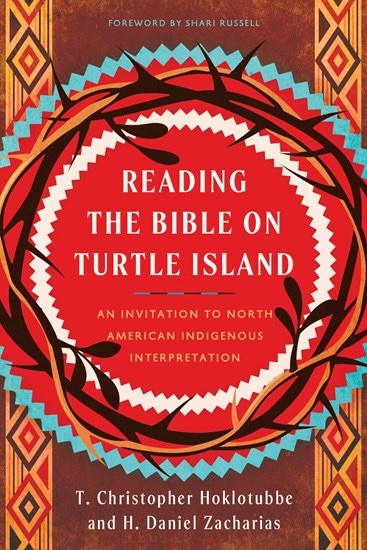
The following is a summary and excerpt from a review of Reading the Bible on Turtle Island: An Invitation to North American Indigenous Interpretation by H. Daniel Zacharias and T. Christopher Hoklotubbe, presented at the Society of Biblical Literature, November 2025.
In Reading the Bible on Turtle Island, H. Daniel Zacharias and T. Christopher Hoklotubbe outline a “Turtle Island Hermeneutics” which intentionally incorporates indigenous worldviews into our interpretive lenses when reading the Bible.
The book’s insights resonate far beyond the United States. Its emphasis on honoring ancestral lifeways speaks directly to my experience within Christianity in general and Adventism in particular in Indonesia, where ancestral practices are often condemned as idolatrous or demonic. This framing has not only harmed indigenous communities in Indonesia but has also erased ancestral memory within families like mine. Likewise, the book’s discussion of land sovereignty mirrors Indonesian realities, where indigenous sacred lands are unprotected because indigenous religions are not recognized as “real” religions by the state and are extracted for profits.
Finally, the book’s vision of harmonious kinship—among humans, land, animals, and the Earth—offers a crucial alternative to nationalist and extractive policies that prioritize uniformity over diversity. For readers like me, this book is not about appropriation, but about learning how to listen, unlearn, and practice solidarity across global indigenous struggles.
Still, I want to ask if centering these liberative values is enough. Is there not also a need for an honest acknowledgement of the Bible’s oppressive potential vis a vis indigenous people (as well as many other vulnerable groups)—even in its seemingly liberative element?
Perhaps before we attempt to rescue the Bible from its association with the Cowboys, we need to acknowledge how the biblical authors/editors potentially lend their ideological thoughts to “the Cowboys”. In other words, to “savage” the Bible at the same time we “salvage” the Bible. This approach is particularly relevant considering that the Bible has historically been used to label Native Americans — and, in fact, other colonized peoples around the world — as “merciless savages.
For instance, while the Sabbath observance may appear to protect individuals from being exploited in labor, historical studies of colonial and antebellum plantations indicate that the concept of the Sabbath actually perpetuates and regulates labor exploitation. The Sabbath ensures the regularization of labor time or a structured workweek (six uninterrupted days). The missionary boarding school plays a significant role in instilling this time-oriented labor ideology. Moreover, although the Sabbath for the Land in the Hebrew Bible seems to promote ecological concern and liberation, scholars like Philippe Guillaume have challenged the idea that it aims at land preservation. Instead, it functions to support Achaemenid imperial projects by redistributing labor power to cultivate new land, primarily for military food supplies and garrison building.
Land preservation, which can be seen as an echo of the Sabbath rest for the land, has often served as a cover for the dispossession of indigenous communities around the world. In the United States, the establishment of national parks has come at the expense of Native American communities under the pretext of natural preservation. Similarly, in Indonesia, the same justification is used to displace indigenous communities for the creation of national parks and other tourist and leisure areas—a supposed space for “rest.” Furthermore, national parks in the U.S. have primarily been utilized for outdoor leisure activities by a specific group of people, excluding many people of color.
Moreover, the Jubilee, which occurs once every fifty years, does not appear to offer true economic liberation, especially when considering human life expectancy in the ancient world. Utilizing the Psalter’s formula of seventy years means that a Jubilee would only happen once in a person’s lifetime. If we adopt the metaphorical literary trope in the Bible of a generation lasting forty years, it suggests that a Jubilee might not occur even once during a lifetime. If we use archaeological estimation of human life expectancy in the ancient Levant (25-35 years), it means it’s not until twice one’s age before the Jubilee might happen.
Scholars like Roland Boer have expressed skepticism regarding the biblical concept of the Jubilee, especially given that surrounding nations may have practiced it. This skepticism arises because, even when these nations or empires did implement Jubilees, such practices were often characterized by partiality, political rhetoric, and avoidance of addressing the actual economic problem.
Allow me to cite Itumeleng J. Mosala, who says that, “One cannot successfully perform this task [of liberation hermeneutics] by denying the oppressive structures that frame what liberating themes the texts encode.” Acknowledging how the Bible has both been used for oppression and resistance also seems to echo with Indigenous peoples’ ethos, which “are often more comfortable with tensions and contradictions.”
Check out Reading the Bible on Turtle Island from InterVarsity Press: https://www.ivpress.com/reading-the-bible-on-turtle-island