
Reading Epiphany with Patti Smith
Reading AudaciouslyAmy L. Dalton
Published 04 January 2026
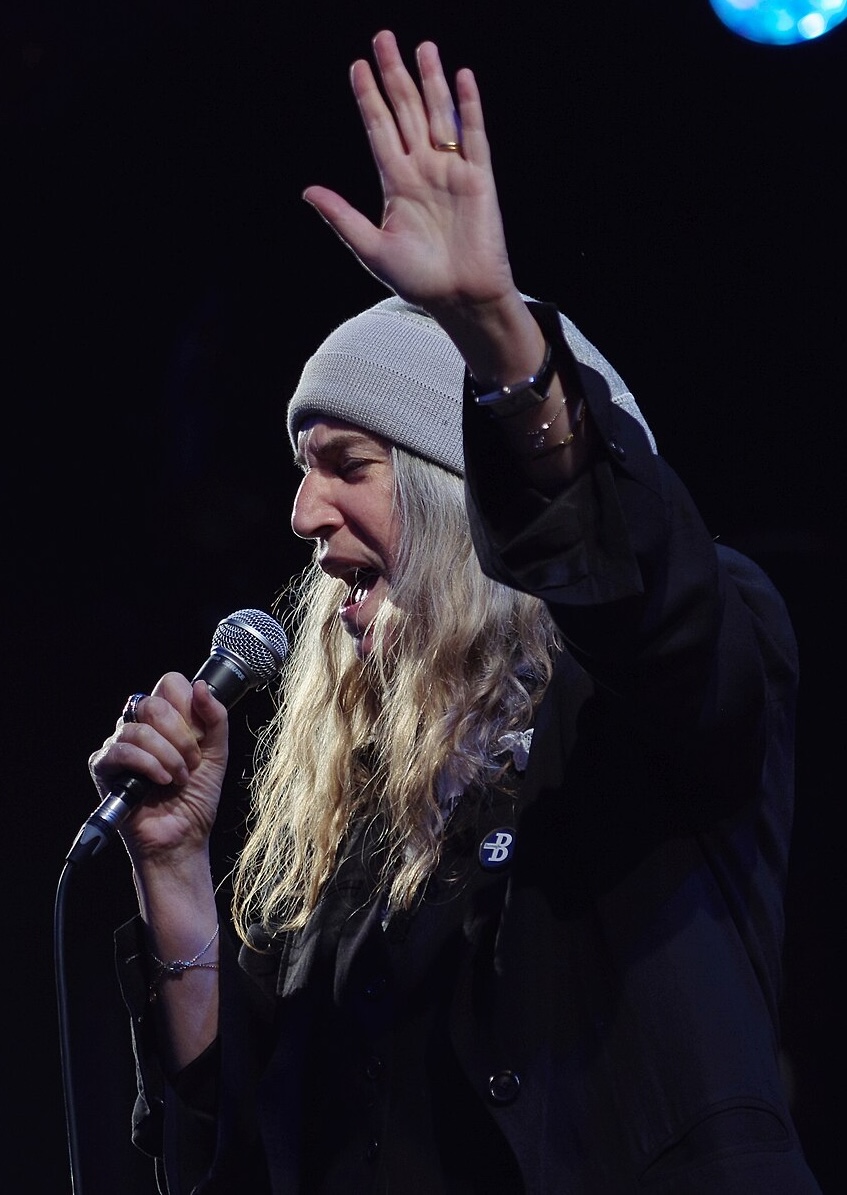
Today is the day that the Church celebrates “Epiphany,” also known as Three Kings Day — though the actual holiday is on January 6. This day is when almost all of our beloved Christmas imagery comes from – the star, the gifts, the creche with the kings and shepherds gathered ‘round. Tradition holds that it took place on the 12th day after Jesus’s birth. Within the church, Epiphany is seen as important enough to have an entire season named after it – the season of Epiphany begins on the Sunday closest to January 6, and goes up until the start of Lent.
Epiphany is a very charged day, one that should not be remembered as only a happy and harmonious gathering, but one which also contains the seeds of deep anguish. In specific, the arrival of the Magi to the place where the holy family was gathered had the effect of triggering the jealousy of King Herod, who then ordered the killing of every male child below the age of two in order to try to eliminate the possibility that the Christ child would survive. Due to the intercession of a dream, this plot is exposed and the Holy Family flees across the border to Egypt in order to keep the baby safe. As a result of these events, for the first few years of the child’s life, the holy family lives as exiles and migrants.
Last year, CLBSJ held an event called “Tragedy and Epiphany” in which we focused our attention on this co-incidence of hope and horror. What does allowing ourselves to feel both, and feel their relationship to each other, teach us for today’s times? (You can watch the archive here.) This year, the need to wrestle with this reality seems all the more pronounced, from where I stand. For just days after the New Year — when the whole world has been sending out heartfelt yearnings that 2026 might bring a new song and a better day — we yet awoke the day before Epiphany with news of the latest fools errand, aka war, aka manufactured distraction.
As my family and I were staring into the abyss of this latest news of human failure, I found myself graciously provided with a counterpoint. The lifeline that Grace extended to me was a memory of a lyric in Patti Smith’s anthem, “People Have the Power” (co-written by Fred Smith). The intercessory lyric was:
“The power to dream, to rule, to wrestle the earth from fools!” (a)
Wanting to understand more, I searched up a rendering of this masterpiece that contained the lyrics, and my family and I gathered ‘round. To my surprise and humble delight I found that this activist anthem offers not only strength for the journey in this current moment, but also a rich scriptural reflection on Epiphany.
The Anthem in Context
The song is considered to be an anthem of the secular left, and has been especially popular in activist and punk circles — but anyone who reads the lyrics can see that it is much more than this. It literally recounts a visionary dream that the songwriter experienced, a dream in which she was given very specific and detailed imagery to explain the situation we face, as well as a strong and unequivocal confirmation of key foundational truths. The song is an expression of faith in these truths, which Smith then faithfully recounts to us. All this is written out as clear as day, impossible to ignore for anyone who reads the lyrics through fully. What is slightly less obvious is that the song is also laced with explicit and implicit biblical references, rendered with such raw and quivering detail that, to me, they have the ring of prophecy.
Before unfolding these references, I looked into Patti Smith’s religious background and learned that she was raised in a mixed-faith family, with her mother a Jehovah’s Witness and har father an atheist. Both her parents read the Bible, and she was involved in her mother’s faith until her teen years. At this point she felt that she needed to choose between her religion and her growing attraction to the arts world — and she chose the latter. But her spiritual journey didn’t end there. By her own words she continued to pursue communicating with God and using her art to create space for others to do so as well (1,2). Many of her songs reflect her ongoing study of the Bible and her theological exploration. Though seriousness of these reflections are usually dismissed by church people who oppose aspects of Smith’s lifestlyle, and most secular listeners don’t focus on the biblical content at all, a handful of commentators have attended to and elucidated the theological and biblical themes in Smith’s work.
This song, in particular, while released in 1988, has continued to speak again and again to movements of people responding to moments of quickening moral concern. In the Voices of a People’s History of the United States, Howard Zinn and Anthony Arnove comment particularly on the song’s influence in 2003 during the protests against the impending war on Iraq. I connected with the song during this time, and I remember these protests as manifesting a particularly rarified level of moral clarity that deeply impacted me personally. There was deep disappointment when we did not succeed in stopping that war, but many lessons were learned and the intention “to redeem the work of fools” remains relevant today.
To bring this energy forward, then, I offer this close reading – an exegesis, we might say – of the lyrics of “People have the Power,” in conversation with Epiphany scriptural themes. In observing these connections and resonances, I do sincerely believe that Smith was inspired in her writing by Divine guidance — which is why I’m motivated to write this. At the same time, I do not know if she would claim or agree with all the references that I discuss here; maybe some of them were conscious, maybe others were subconscious, and still others she might have had other intentions than what I observe. The observations I am making are related to my own personal journey, perhaps most of all.
With that said, here is how I read “People have the Power” as an Epiphany vision. I suggest watching the video (https://youtu.be/pPR-HyGj2d0?si=2vAStuljH39V7gYI) before reading my exegesis below. You can also consult the full lyrics where are at the bottom of this article.
Exegesis
I was dreaming in my dreaming
Smith begins with this statement that points to the dual nature of dreaming. Not just an aesthetic choice, this repetition can be understood as a framing message to the reader/listener. We use the word “dream” to mean the psycho-somatic experience of mental journeying while sleeping, but we also use the word to mean the semi-conscious process of allowing the mind to open to larger and higher hopes and possibilities. More importantly, our use of the term often renders the lines between these two types of dreaming fuzzy and porous. This two-layered nature of dreaming will be central to what will be relayed in the song.
What was she dreaming (in her dreaming) about? The short answer is Christ consciousness:
I was dreaming in my dreaming
of an aspect bright and fair.
“Aspect” in astrology is used to refer to a relationship between celestial bodies. To point out an aspect is like pointing out a star, but instead focusing on the relationship between the star and you, or the star and another star. There is a long tradition of describing Jesus as a bright star. Revelation 22:16 is usually understood as Jesus identifying himself with the “Bright Morning Star.” In Matthew chapter 2, the magi literally use a star to find their way to the Christ Child, and they explain that it was “his star.” Like the three magi, Patti Smith is having a vision of the Living Christ communicated through a bright heavenly vision, which was offered to her in a specific way.
In my sleeping it was broken
but in my dream it lingered near
Here again we have a reference to the dual nature of her experience. In the physical realm of sleeping, this bright force is broken — which is the reality of what eventually happened to Jesus’s physical body, as well as the physical bodies of so many dreamers throughout the ages. But in the higher layer of dreaming, the power of this bright aspect is not broken, but is intimately present with the terrestrial dreamer, and her lyrics suggest this force is staying with her by conscious choice. This image resonates with how Christians understand the resurrected and living Christ.
in the form of shining valleys
where the pure air recognized
The dreamer experiences that the “bright and fair aspect” is embodied in “shining valleys.” This language resonates with a scriptural theme that is used often during the Christmas season, whereby the valleys are raised up as part of the preparation for Christ to come amongst us. One of the Hebrew Testament roots to this image is Isaiah 40:3-5, in which the process of evening out a rough, unpaved road results in the possibility of (in some translations) “God’s bright glory shining out.”
In Smith’s dream, this shining out of God’s glory is felt physically through the quality of the air, and linked to a process of recognition. Interestingly, Smith’s dreaming self uses the term “recognized” without a direct object. This is grammatically incorrect based on how we normally use the term, but Smith’s usage makes sense if one allows “recognition” to refer to a visceral process of re-cognizing or re-embodying the knowledge of the Unnamable that we already have.
and my senses newly opened
well I awakened to the cry
that the people have the power
All this embodied re-cognition allows for a physical experience of perception that is unique and set apart from normal experience. In the Bible, stubbornness of perception is often described in physical terms – including as hard-hearted and stiff-necked. Sometimes our inability to perceive is so pronounced that parts of our bodies don’t function as they should. Jesus attempts to interrupt this reality on multiple occasions when he adds after his teachings, “any who have ears, hear!” In the same spirit, here the intercession Smith has experienced opens every part of her sensory body to fully take in a cry that is going up from our laboring world: “that the people have the power.”
What it does it mean to say that people have the power? This has become a slogan, and like any slogan it can be experienced as jargon and therefore become mystified. Even though it might seem like its hard to misunderstand, this force of mystification can interrupt our ability to “have ears.” Smith counters this mystification by explaining what she means progressively through the song. This is the first midrash:
that the people have the power
to redeem the work of fools
from the meek the graces shower (b)
it’s decreed the people rule
I read the third line as a restating of one of the Beatitudes, rendered in the Gospel of Matthew 5:5 as “Blessed are the meek, for they will inherit the earth.” Smith’s rendering explains how this inheriting will happen: Graces come from and through “the meek,” or the experience of vulnerable humility (b). This dispensation is linked to the nature of the people’s power. It is the people who embody and are aligned with the meek who have the power to “redeem the work of fools.”
It is important here that Smith creates a strong contrast between “the people” who are aligned with “the meek” versus “fools” who are creating the problems that trouble us so. This strong contrast is the reason that the song came to me as my family and I were struggling with the news of another foolish war. This contrast is biblical: The writer of the Gospel of Luke also created this contrast in his rendering of the Beatitudes. As he recounts, Jesus’ blessings to the poor, the hungry and the struggling were accompanied by “woes” delivered to those who are now have wealth and reputation. It might be that, in our current time, a full understand of one category of humans is only possible if one also has a full understanding the other. The context we live in is one where there is an extreme divergence between the experience of wanton, entitled power and the experience of vulnerable humility. In this context, God chooses the experience of vulnerable humility as the Divine channel.
“It is decreed!” the dreamer concludes. It has been made unequivocally clear to her that this is true: those humans who align with the meek have the power to inherit and rule the earth.
The next stanza speaks to the complex reaction to this reality becoming known:
Vengeful aspects became suspect
bending low as if to hear
and the armies ceased advancing
because the people had their ear
and the shepherds and the soldiers
they laid among the stars (c)
exchanging visions
and laying arms
to waste
in the dust
This whole stanza is fascinating and laced with Biblical and historical references. The reference to shepherds and the stars clarifies that we are still interacting with the Epiphany moment. The lines before it clarify the nature of these stars: in the experience of the prophetess’s dream, the term “aspect” can be used to refer to a bright and fair forces such as the Christ, but can also be used to refer to other forces. This usage resonates with the way the Bible describes angels with similar imagery to Christ, but at times with moral ambivalence. When the Christ story unfolded, it was not just the unilaterally righteous (whoever that is!) that took note. Less righteous energies, both human and celestial, also took note. Those celestial aspects — and their human reflections, here represented by soldiers — are allowing themselves to be used by vengeful agendas and their component parts (jealousy, competition, fixation on the surfaces, pursuit of worldly power, violence). The Christ story causes even those whose beings are full of these energies to “bend low,” wanting to hear a different song. One commentator(3) likened this passage to God’s promise in Hosea 2:21: “‘In that day I will answer,’ declares the Lord,‘I will answer the heavens, and they will answer the earth.”
As the celestial aspects turn their ears to this answer, their human counterparts do likewise, and for a moment they halt the march of vengeance. Soldiers cease advancing — something the Bible describes as caused by God (John 18:6, Psalm 46:9) because, Smith says, “the people had their ear.” The people here are enacting the will of God on earth. This resonates with developments in recent history. We know that soldiers have the power to refuse to follow illegal and inhumane orders, and have deployed this power on multiple occasions in modern history. Despite intimidation, we continue to tell these stories to each other. In Smith’s dream, these soldiers who opt to exercise this power of refusal lay down alongside the shepherds, the personification of the meek — just as predators and prey are prophesied to lie down together in Isaiah (11:6, 65:25). These transformed elements of the heavenly and the human realms touch and mingle, and the fruit of this is the exchange of visions of the promised peaceful future.
Where there were deserts
I saw fountains
like cream the waters rise
and we strolled there together
with none to laugh or criticize
and the leopard
and the lamb
lay together
truly bound
The first lines are resonant of multiple scriptures which identify abundance rising out of parched land (Isaiah 35:1-2), which are also scriptures used traditionally during the seasons of Christmas and Epiphany. In this space of renewed abundance, the dreamer strolls alongside another figure, and in this space no one will cast judgment on their connection. I hear in this line a reference to the beloved hymn “In the Garden” which portrays the connection that Jesus has with Mary Magdelene just after his resurrection, drawing from John 20:1-2. Like the deeply misunderstood Magdelene, Smith may be having an experience of deeply personal connection to the risen Christ. Buoyed by this connection, Smith then returns a second time to the reference to Isaiah 11:6-9. The biblical prophecy reads:
The wolf will live with the lamb, the leopard will lie down with the goat, the calf and the lion and the yearling together; and a little child will lead them. The cow will feed with the bear, their young will lie down together, and the lion will eat straw like the ox. The infant will play near the cobra’s den, and the young child will put its hand into the viper’s nest. They will neither harm nor destroy on all my holy mountain, for the earth will be filled with the knowledge of the Lord as the waters cover the sea.
Smith’s delivery of the words “truly bound” is always emphatic and exaggerated. One gets the sense that she wishes to counter a merely metaphorical reading of the Isaiah prophecy – which is quite well known, but perhaps not often internalized, and less often enacted. This year, my experience of this insistent delivery is infused with the experience of having recently viewed Zootopia 2, which — for anyone who is not currently hanging out with a “little child” — is entirely focused on an imagined society in which predators and prey have forged a common life together. Zootopia is not the only recent children’s show that portrays the theme of predator-prey harmony with the same level of emphatic insistence as Smith’s singing. Similar themes are strongly delivered in Finding Nemo and Hilda. When discussing these visions with children, one by necessity moves into a space where the literal possibility of such a scenario is taken seriously and considered in detail. What would it mean for the leopard and the lamb, the soldier and shepherd to lie down together, truly bound? Attempting to imagine it is like engaging a Zen koan. This passage also points toward one of the more intriguing assertions in the New Testament, that for those on the path, whatever we bind (or, perhaps, make connected) on earth will also be bound in heaven (Matthew 16:19 and 18:18).
The next stanza speaks to this process of binding as Smith experienced it in her dream:
I was hoping in my hoping
to recall what I had found
I was dreaming in my dreaming
God knows a purer view
as I surrender to my sleeping
I commit my dream to you
Here the voice shifts from recounting the vision in the dream, to reflecting on the experience of dreaming. And immediately Smith again reminds us of the dual nature of the whole process. She is hoping in her hoping, dreaming in her dreaming. The dreamer – who is also a sleeper – doesn’t want to forget the dream. She knows it offers something that is needed. But her body needs to sleep and as all dreamers know, when you shift from a dream either toward deeper sleep, or toward waking, the memory of the dream often fades quickly. So as Smith prepares to surrender to his human reality, her mind searches for a way to remember what she has been shown. As part of this process, she commits that she will pass on this dream – to “you”, to me, to us.
It is interesting that, as she makes this bargain with her dreaming consciousness, is the only time Smith explicitly references God in the entire song. The phrase “God knows” is probably heard by many as simply a colloquialism that has been for many divorced from a belief in God. But I feel the statement she is making is much more specific than the colloquial use of this expression. She is saying that God is her witness that the information she has obtained through his higher level of dreaming and hoping offers a purer view than that available to us in normal life. This is how the prophetic biblical writers often seal their writings as well – they make statements that indicate that God witnessed and sanctified this communication. And it seems that her bargain was accepted; she was allowed and helped to remember the dream’s vision, and as a result we have this song.
The power to dream,
to rule
to wrestle the earth from fools (a)
This was the line that came to me when I was struggling with the latest bad new — and for me it is a mantra for this moment. Another “midrash” on the slogan “the people have the power,” these lyrics propose a threefold nature to the people’s power:
-
it is a power of discernment: to see and articulate higher possibilities. As Smith is quoted as saying in an interview on German television “I think that God is as we invest in him… We all have this opportunity and also this blessing to be magnified… Being magnified by the idea of God means that we are living imagination.” (4)
-
it is a power of authority: to manifest the vision Jesus laid out in the Beatitudes, in which the meek inherit and rule the earth. This is also the literal meaning of the word democracy: demos (people) + kratia (authority)
-
it is a power of action: to engage in the process of making this people’s rule manifest, which requires the word “wrestle” to represent it fully. As Frederick Douglass put it, “This struggle may be a moral one, or it may be a physical one, and it may be both moral and physical, but it must be a struggle.”
Smith then adds a final epilogue to her anthem, which address a question all humble travelers should be asking ourselves: how do we humans, meek, flawed and struggling with our own vengeance and other confusions, become “the people” who have the ability do do all this?
Listen:
I believe everything we dream
can come to pass through our union
we can turn the world around
we can turn the earth’s revolution
This epilogue is Smith’s statement of faith.
The instruction “Listen” links the statement to the Shema, the central prayer in Jewish life, which comes from Deuteronomy 6:4: Hear, O Israel: The LORD our God, the LORD is one.
Smith’s Shema unfolds this further. Listen, people. Everything that we dream, which has been given to us by God to dream, is possible through the process of claiming and centering the work of cultivating union.
Smith’s Shema is also intertextual – it is drawing from and commentating on the song “Solidarity Forever,” in which the force of Union transforms the workers’ aspirations to reality.
This reading is cohesive with how biblical scholars understand the meaning of the Hebrew term used in Deuteronomy 6:4. While we translate the final word as “one,” the Hebrew word used here, echad (אֶחָד), carries a more nuanced sense of a sense of unity, wholeness and composite oneness.
Open your ears, God-Wrestlers: True authority, our Transcendent, is “in solidarity.”
When we perceive this quality of the Divine, and commit to cultivating it amongst ourselves, that is when we gain traction toward manifesting the power of the people.
Postscript:
Religious people often experience the left’s claim that “people have the power” as in contrast to believing in and respecting God’s power. But I don’t agree. I think God is constantly trying to get us to claim our power to make God’s will of justice and peace manifest “on earth as it is in heaven” (Matthew 6:10). And yet, it is easy and perhaps overdetermined for humans to abuse power. So the nature of the power that God is asking us to claim needs to be exegeted. It needs to be parsed with a high degree of specificity so that each one of us can discern how to adjust ourselves internally and externally so that we are ready and able to be a part of cultivating this power. The left doesn’t often unpack our slogans in this nuanced way. In this song, Smith is doing that work in a way that anyone can engage with, and in the process she is also offering Christians a window into the living Gospel as it is unfolding in the church of the streets.
For me, it doesn’t matter if the channel for such insight is someone whose own theology is still under development – whose isn’t? It doesn’t matter if the container for such insight is a sanctuary, a poetry slam, or a dance hall. What matters is the quality of inspiration, and I find that quality in Smith’s work. No organized religion has ever or can ever corner the market on interpreting God’s messages to humanity. God does not stop speaking to people who grow frustrated with the limits of our traditions and institutions. God continues to speak with and through those who make their way toward comprehension on unpaved paths. Those who persist in listening for the voice of the Transcendent from outside of organized religion know that the Bible belongs to every dreamer.
Full Lyrics:
I was dreaming in my dreaming
of an aspect bright and fair
In my sleeping it was broken
but in my dream it lingered near
in the form of shining valleys
where the pure air recognized
and my senses newly opened
I awakened to the cry
that the people have the power
to redeem the work of fools
From the meek the graces shower (b)
it’s decreed the people rule
People have the power
People have the power
People have the power
People have the power
Vengeful aspects became suspect
bending low as if to hear
and the armies ceased advancing
because the people had their ear
and the shepherds and the soldiers
they laid among the stars (c)
exchanging visions
and laying arms
to waste in the dust
in the form of shining valleys
where the pure air recognized
and my senses newly opened
and I awakened to the cry
People have the power
People have the power
People have the power
People have the power
Where there were deserts
I saw fountains
like cream the waters rise
and we strolled there together
with none to laugh or criticize
and the leopard
and the lamb
lay together truly bound
I was hoping in my hoping
to recall what I had found
I was dreaming in my dreaming
God knows a purer view
as I surrender to my sleeping
I commit my dream to you
People have the power
People have the power
People have the power
People have the power
The power to dream, to rule
to wrestle the earth from fools (a)
it’s decreed the people rule
it’s decreed the people rule
Listen:
I believe everything we dream
can come to pass through our union
we can turn the world around
we can turn the earth’s revolution
we have the power
People have the power
The people have the power
The people have the power
The power to dream, to rule
to wrestle the earth from fools (a)
Well it’s decreed the people rule
it’s decreed the people rule
we have the power
People have the power
we have the power…
References:
(a) most online sources list this lyric as “to wrestle the world from fools”, but when I listen to the original audio, I hear her saying “earth,” not “world.”
(b) most online sources list this lyric as “upon the meek, the graces shower,” but when I listen to the original audio, I hear her saying “from,” not “upon.”
(c) most online sources list this lyric as “they laid below the stars,” but when I listen to the original audio, I hear her saying “among,” not “below.”
(1) Patti Smith: The childhood dreams of a Jehovah’s Witness
https://evangelicalfocus.com/between-the-lines/591/patti-smith-the-childhood-dreams-of-a-jehovahs-witness
(2) “Patti Smith’s spiritual journey” by Ray Padgett
https://thunderstruck.org/the-story-behind-patti-smiths-gloria/
(3) “The Secret Jewish History of Patti Smith” by Seth Rogovoy
https://forward.com/culture/music/322628/patti-smith-and-her-religious-influence/
(4) The Theology of Patti Smith” by Stephen H. Webb
https://firstthings.com/the-theology-of-patti-smith/
(5) “Patti Smith: An unlikely religious poet” by Sean Wild
https://uscatholic.org/articles/202511/patti-smith-an-unlikely-religious-poet/
(5) “Politics of Epiphany” by John Allen
https://politicaltheology.com/politics-of-epiphany/
Image from Wikimedia Commons
EpiphanyIMGP4121smialwp.jpg)