
Purim Amidst Polarization: Reading Esther for Transformation
Reading AudaciouslyAlexiana Fry
Published 03 March 2026
The Jewish festival of Purim starts on the evening of March 2, and continues until sundown on March 3. As a scholar of Esther, the book that holds its supposed “origin” story, I always think of it more vividly on the days it is traditionally celebrated by religious communities. This year, however, I’m thinking less about the joyous and humorous tones that Purim brings and more about trauma.
The book of Esther outlines the story that many of us have likely heard: an unlikely orphan/adoptee Jewish girl becomes Queen but has to hide her Jewish-ness; her relative, Mordecai, makes the big bad villain, Haman, mad, and he decides genocide is an appropriate outlet for his feelings; Mordecai pleads to Esther to fix the problem and she agrees, risking death and playing strategic hostess before outing Haman to her husband, the King; Haman is hung, a counter-edict is written, the Jews get to defend themselves against their enemies, and then they party after their victory—Purim.
But careful readers of the text, unless you are reading the Greek versions of Esther, likely notice there is a significant amount of information missing in this fly-by summary. While the pogrom plot has been thwarted, which rightly deserves celebration, other losses receive little attention.
For starters, the plot begins with the creation of a law that firmly establishes the man as master of his home (1:22) because the Queen at that time, Vashti, refuses the King’s request in an effort to maintain their honor amidst the normative gender codes of that day (1:11-12). Although the story is already set in a patriarchal context, and Vashti is not technically subverting this order even in her “no,” the insecurity and violence of male supremacy require constant maintenance. Vashti is scapegoated to ensure dominance. The main character, Esther, alongside many nameless, faceless young girls throughout the Persian regime, is trafficked to the palace due to the unintended consequences of Vashti’s removal (2:1-4, 8), yet another gender-based state-enforced abusive action that colors the supposedly silly story. While Esther is able to survive and rise to power in this system, even saving her people, the edicts that harm girls and women are not “reversed,” and the story ends with the glory of Mordecai (10:3). The story begins and ends with, or sustains, gender oppression.
Further, what happens on the day of Haman’s edict and the counter-edict is, in actuality, a terrible war. We might shrug our shoulders and think it is inevitable, given the way the book is narrated, but then we get to 9:13, where Esther asks the King for another day of killing. Power has indeed changed hands. Three hundred more people are slaughtered the next day (9:14-15). What Haman had intended was for the Jews to be killed, destroyed, and annihilated; and what could have been more easily defended as self-defense on 13 Adar turns into another “lawful” act by turning the thwarted potential genocide into an actual genocide on 14 Adar. Where the Jews now have the right of defense, these enemies have none, which is what Haman had wanted for them to begin with. The logic of permanent security, in which murder becomes justifiable to prevent and preempt potential threats, is what Haman used to justify his plan to the King. This logic, in a way, is what we see occurring in 9:13, especially as there is no law allowing for anyone to attack the Jews, whereas there was the previous day. In these conditions, anyone can easily be rendered as, well, a terrorist. We view a kind of mirror image. The empire’s power to divide and conquer is palpable.
Although the story of this moment is not the same as the ancient tale of Esther, I cannot help but notice parallels. Cis-hetero patriarchy has long ruled, regardless of the gains women and queer folks have made; these gains have been deemed a threat to “natural family values,” and the overturning of Roe v. Wade, alongside President Trump’s executive order that there are only two genders only reinscribes and escalates the violence many of these bodies have known instead of “protecting” them. The lack of accountability as the Epstein files are slowly released has compounded the reality that our society is not interested in ever believing victims, unless they are already powerful white men.
Further, this administration has defined the enemy of “America.” “They” are everywhere in the country, “different” from “us,” and do not keep “our” laws, so “we” should not tolerate “them.” Those enemies are anyone who is perceived as a migrant — non-white and speaking more than one language, or English with an accent — as well as trans folks. The permanent security illogics at play have been so vastly harmful that the Lemkin Institute, an organization that works to prevent genocide, has issued multiple red alerts for both of these communities currently living in the United States.
Even these examples do not touch on how the setting of the book of Esther, located in ancient Iran, as well as other elements within the book, such as the trope of Amalek, are being referenced by those with an unholy desire for “holy war” in modern Persia. There is no such thing as a just war.
Indeed, the power of this empire to divide and conquer is an ever present weight.
But the story of Esther, one that is marked by egregious inhospitality and its effects, does not have to be ours.
One example of choosing otherwise is the Chapter 9 Project, written for the first Purim in the midst of the current genocide in Palestine by The Shalom Center, a Jewish organization with roots in civil-rights activism. The authors of these new endings to the book imagined Esther and Mordecai stopping the cycles of harm and hatred, with grief and joy together rather than in opposition. While these versions of Esther’s final chapters remain fiction, I believe they are being lived out in cities like Minneapolis. Although some religious communities have perpetuated the violence of Empire, as it is evident at Cities Church, many interfaith clergy in the area and beyond have come together to say boldly that interdependence and mutuality are our best way forward. The recognition and embrace of a collective body resists well-worn patterns of harm, redirecting blame to the conditions that make atrocity possible. We can refuse the ending of Esther, taking this moment as one that allows us to reimagine something beyond the status quo.
This Purim, I am reminded that trauma is present, but it can be transformed.
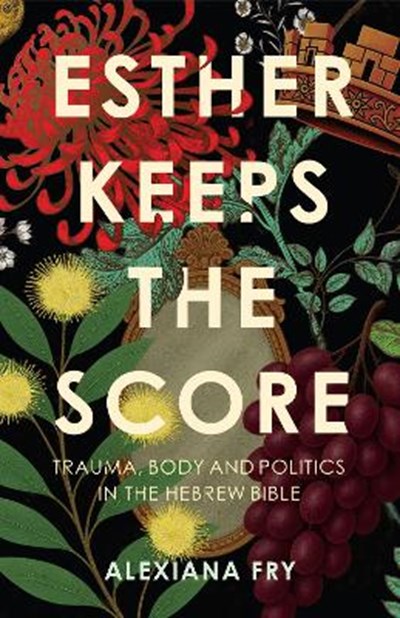
Alexiana Fry is a postdoctoral researcher at the University of Copenhagen and author of the forthcoming Esther Keeps the Score: Trauma, Body and Politics in the Hebrew Bible. You can find her scholarship at www.alexianafry.com. This piece was originally published at Baptist News Global.